✓
Risk decisions are based on targets
A limb over a roof, driveway, or neighbor’s fence is treated differently than the same limb over open turf. We plan cuts and lowering around what could be damaged.
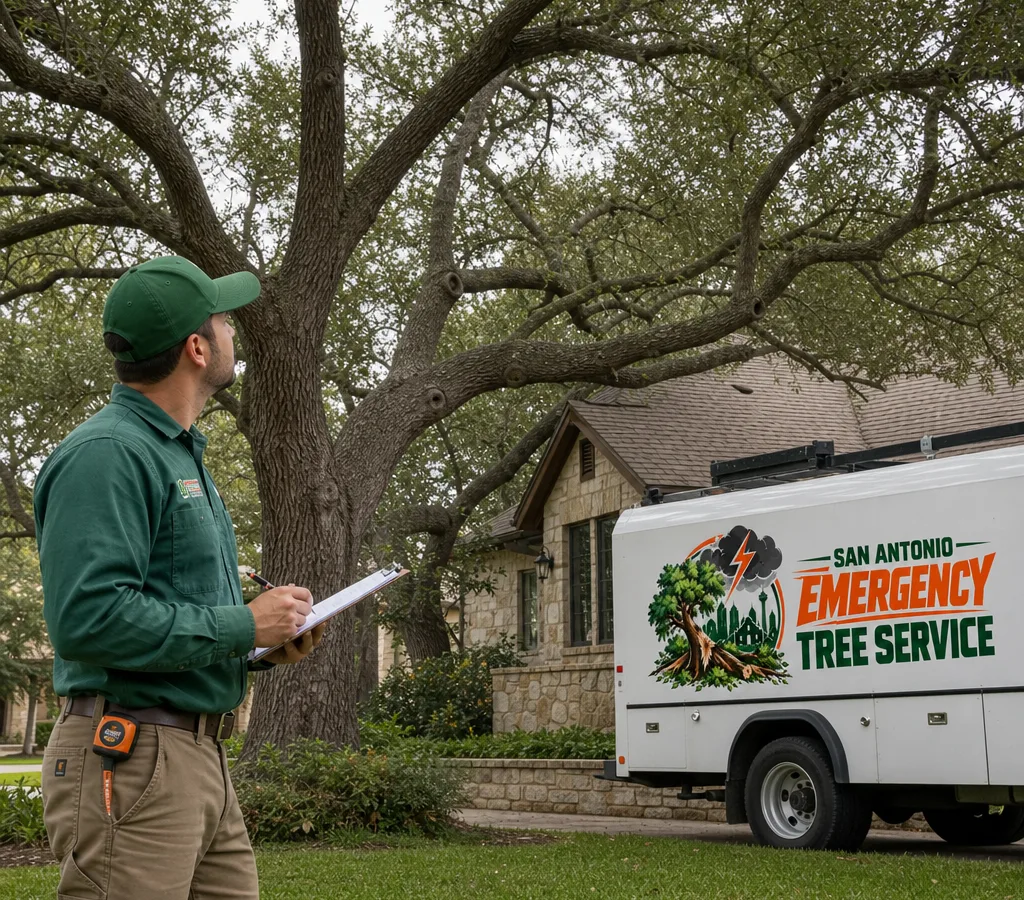
Certified arborist · San Antonio
Get a clear, safety-first plan for your trees. We assess risk, recommend the right work for the species and site, and handle urgent situations with professional cutting and cleanup.
Searching for a certified arborist San Antonio usually means you need more than a quick trim. You want an informed opinion on tree health, structural risk, and what work is actually necessary.
Our arborist-led approach starts with the tree’s condition, targets underneath, and how access affects safe work. Live oaks, cedar elms, pecans, and fast-growing ornamentals can hide included bark, deadwood, decay, or root-zone stress.
For storm damage or sudden failure, we reduce immediate hazards first. When the tree is stable, we explain the options, provide a written scope, and help prioritize what must happen now and what can wait.
A whole-tree evaluation
A certified arborist visit is not a guess. We look at the tree as a system and document what we see so you can make a decision you can defend.
A typical on-site evaluation covers:
Established Alamo Heights properties often place trees near roofs and utility service drops. Stone Oak can present tight side-yard access and hardscape, while legacy trees in Terrell Hills may carry heavy limbs over driveways and streets. Each condition changes how the work is staged.
For urgent hazards, the same evaluation happens quickly but still drives the cutting plan. Photos of the tree and anything it struck help us plan equipment and crew needs before arrival.
Better decisions in the field
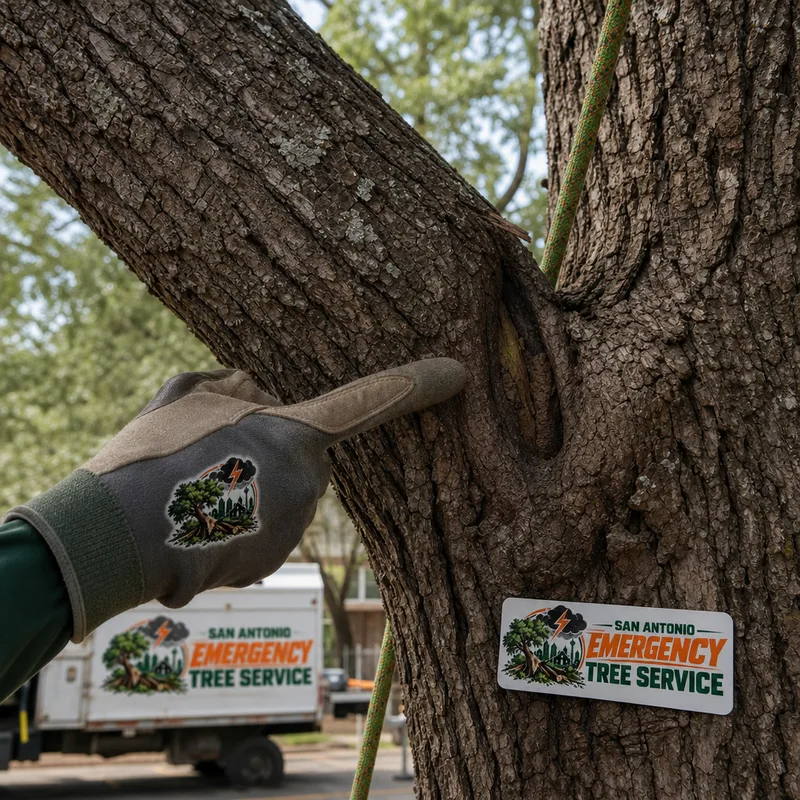
A limb over a roof, driveway, or neighbor’s fence is treated differently than the same limb over open turf. We plan cuts and lowering around what could be damaged.
We avoid topping and explain what reduction, thinning, or selective removal can and cannot do for safety and tree health.
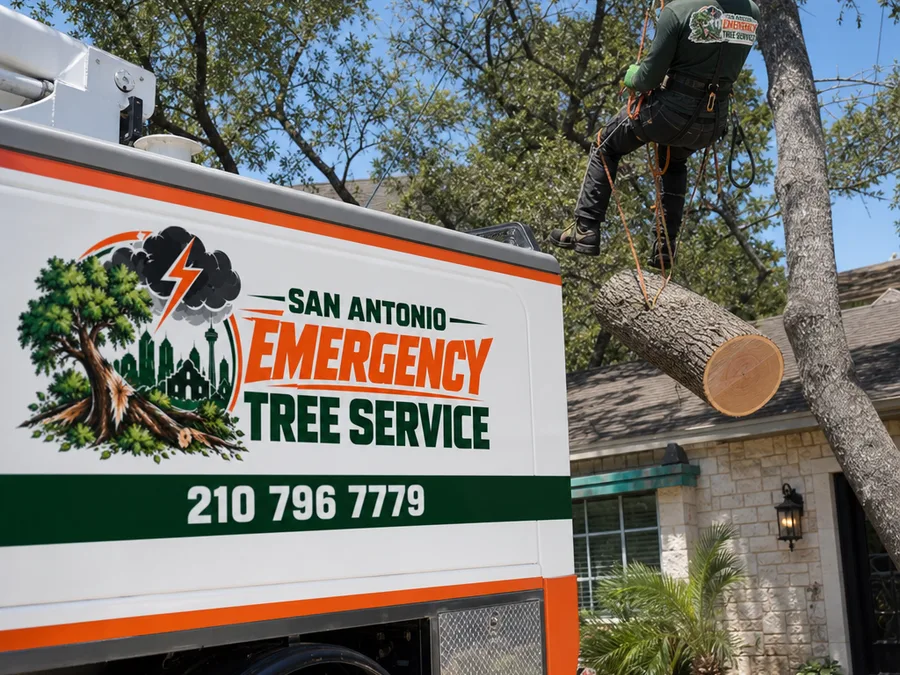
When removal is the right choice, controlled rigging and piece-by-piece work reduce the chance of collateral damage on tight San Antonio lots.
Broken tops, hanging limbs, and split trunks are handled in the right order: stabilize hazards first, then clean up and finish the scope.
You should know what gets cut, what gets hauled, and what stays. We confirm details before work starts so the crew and homeowner are aligned.
From assessment to cleanup
Tell us what you are seeing—leaning tree, cracked limb, uprooting, dead branches, or storm damage—and what the tree could hit. Photos help us plan the safest approach.
We inspect the tree, discuss risk, and recommend the right scope. If safety is the priority, we address hazard reduction first and schedule remaining work if needed.
We identify a drop zone, set rigging points, and protect surfaces like pavers, driveways, and planting beds where practical. Tight access and overhead obstacles change the plan.
We make the planned cuts, lower sections in a controlled way when needed, and manage brush and wood so the job stays organized and safe.
We confirm the scope is complete, handle remaining debris, and review any follow-up recommendations.
Practical cost guidance
For most San Antonio properties, certified arborist work typically runs about $150 to $500 for an assessment and minor pruning, while larger pruning or complex removals commonly range from $900 to $3,500+, depending on tree size and rigging needs. Emergency, after-hours, or storm-response work can price higher because of added labor and safety steps.
Your final cost depends on height and trunk diameter, proximity to structures, access through gates or tight side yards, debris hauling, and whether controlled lowering is required. Exact pricing is confirmed after the on-site inspection and a written scope.
Field work in San Antonio
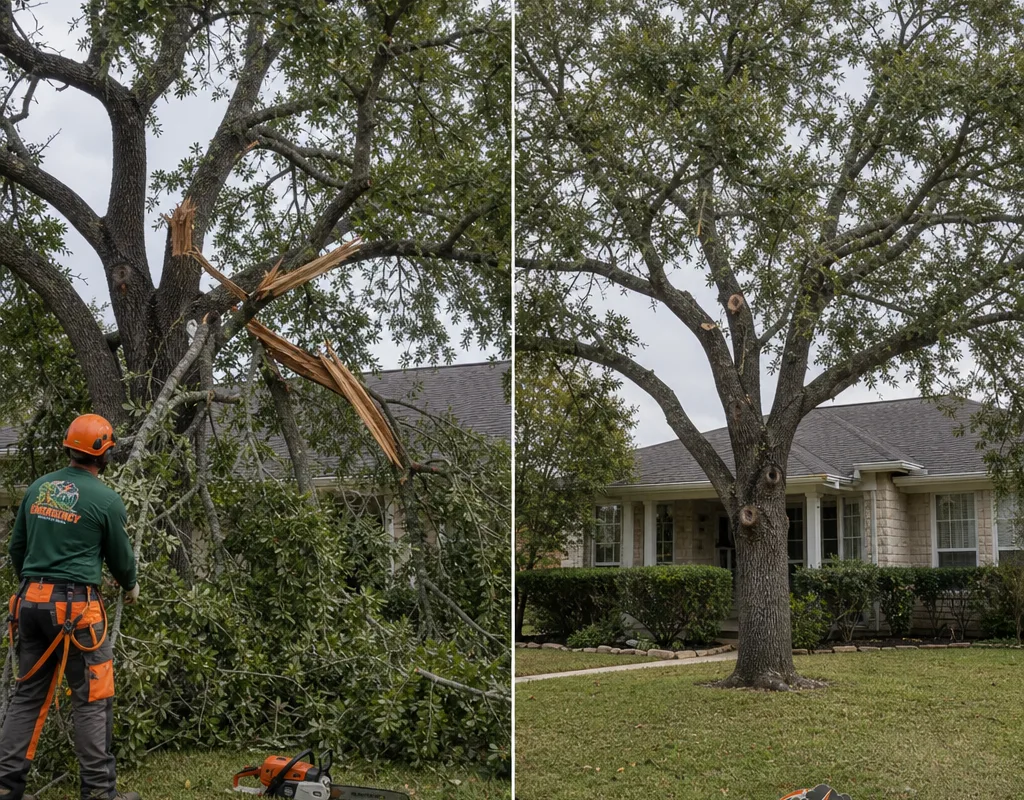
Practical answers before work begins
Yes. A certified arborist evaluates structure, defects, and targets on your property and can recommend pruning, cabling support in some cases, or removal when risk is not manageable. Trees with split leaders, major decay at old wounds, or root-plate movement after storms often warrant more than cosmetic trimming.
Yes. If there is an active hazard such as a hanging limb, split trunk, or storm damage over a structure, we prioritize making the site safe first and then finish the agreed scope. Share photos and what the tree could hit so access and rigging can be planned before arrival.
No. Topping creates weak, fast regrowth and can increase risk while stressing the tree. If height reduction is needed, we recommend reduction cuts that respect branch structure and species limits, or discuss removal if the tree is in the wrong place for its mature size.
Access and targets determine the method. Narrow gates, overhead service lines, nearby roofs, and limited drop zones usually mean sectional removal with rigging and controlled lowering rather than felling. We inspect anchor points, equipment access, and safe staging areas.
For the initial assessment, it helps to be present so priorities and the scope around structures, gates, and protected areas can be reviewed. For the work itself, many homeowners choose to be away when access, written authorization, and scope notes are arranged.
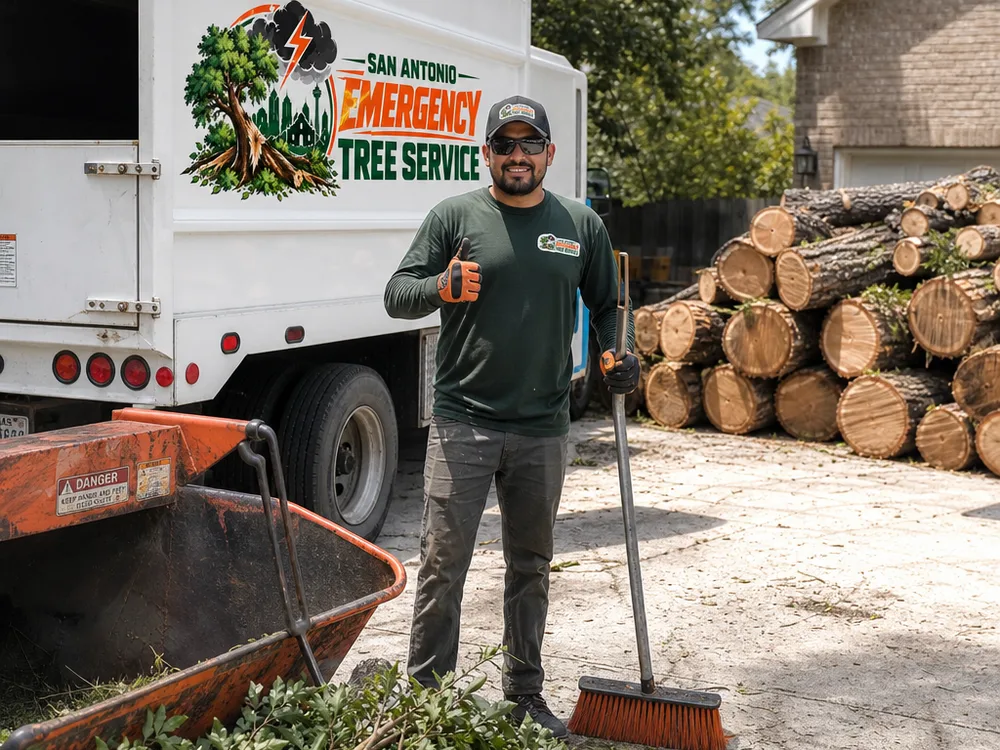
Debris hauling is typically included when it is part of the written scope. Brush, smaller limbs, and wood can be removed, and we can discuss keeping firewood-length pieces when practical. Cleanup details are confirmed before work begins.
Safety starts with the right evaluation
Tell us what you are seeing and what the tree could hit. We will recommend the safest next step, provide a clear scope, and schedule the work based on urgency and access at your San Antonio property.