✓
Hazard-first approach
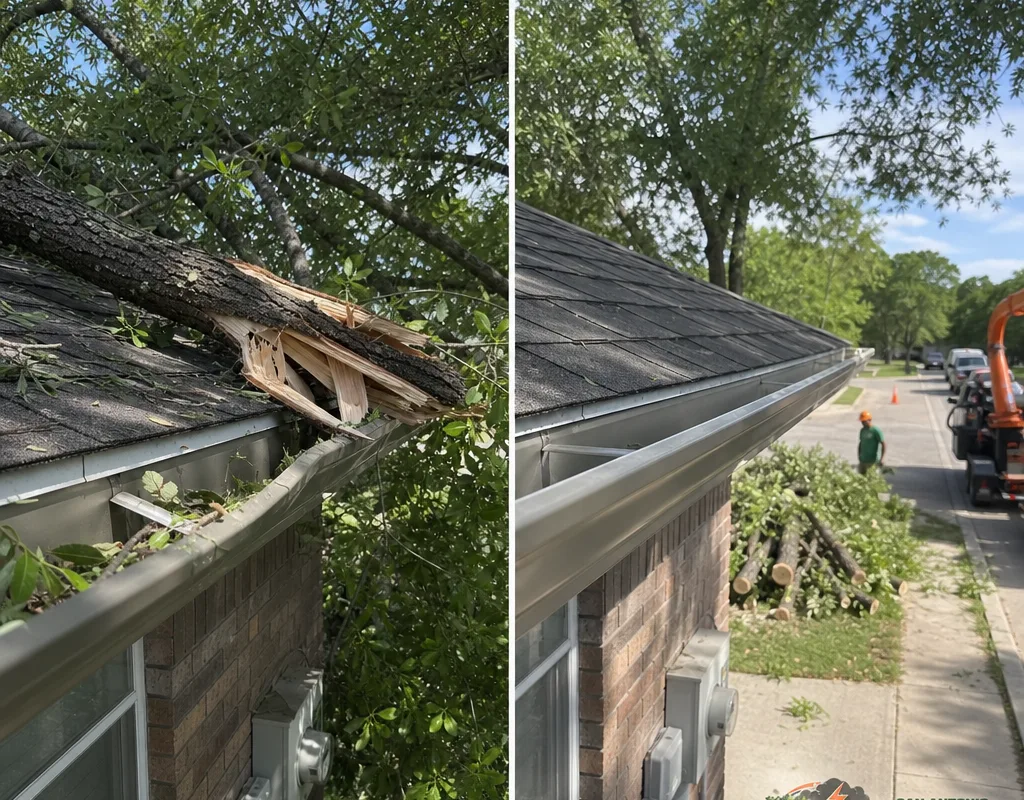
We prioritize what can fail next: hung-up limbs, cracked leaders, split trunks, and anything contacting a roof, fence, or vehicle.
Tree cutting · San Antonio
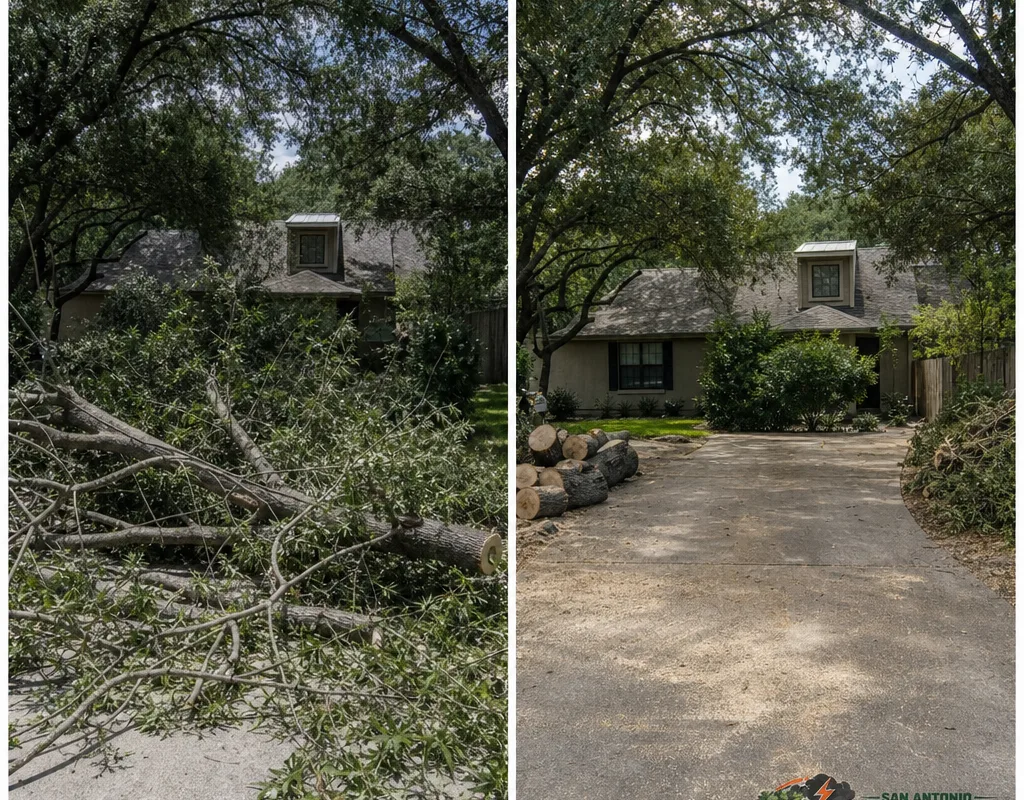
When a limb is hanging over the roof or a storm drops a tree across the driveway, you need safe cutting and fast cleanup. Our insured crews remove hazardous limbs and downed trees, protect your property, and leave the area clear and usable again.
Tree cutting in San Antonio is often urgent work. A split limb can fall without warning. A partially uprooted tree can shift overnight. After thunderstorms and high winds, damage is not always obvious from the street, but you may hear cracking, see fresh lean, or notice branches resting on a roofline.
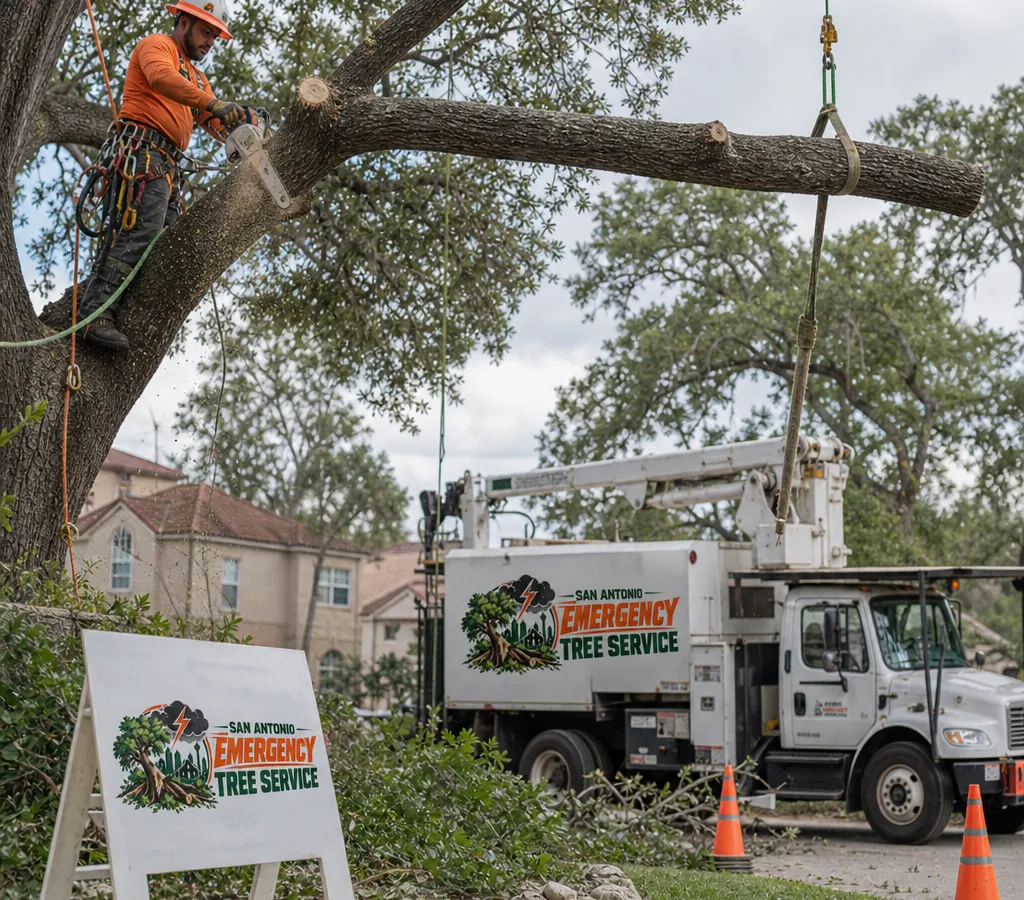
Emergency Tree Service San Antonio focuses on controlled cuts that remove the hazard without creating a bigger one. That means planning the drop zone, using rigging when there is no clean landing area, and cutting in sections so weight comes off the tree in a predictable way.
If your situation is bigger than cutting alone, such as a full downed tree that needs to be taken away, you can start with our San Antonio tree removal service for the full removal scope. Either way, you get a clear plan before any saw starts.
Controlled work from cut to cleanup
We prioritize what can fail next: hung-up limbs, cracked leaders, split trunks, and anything contacting a roof, fence, or vehicle.
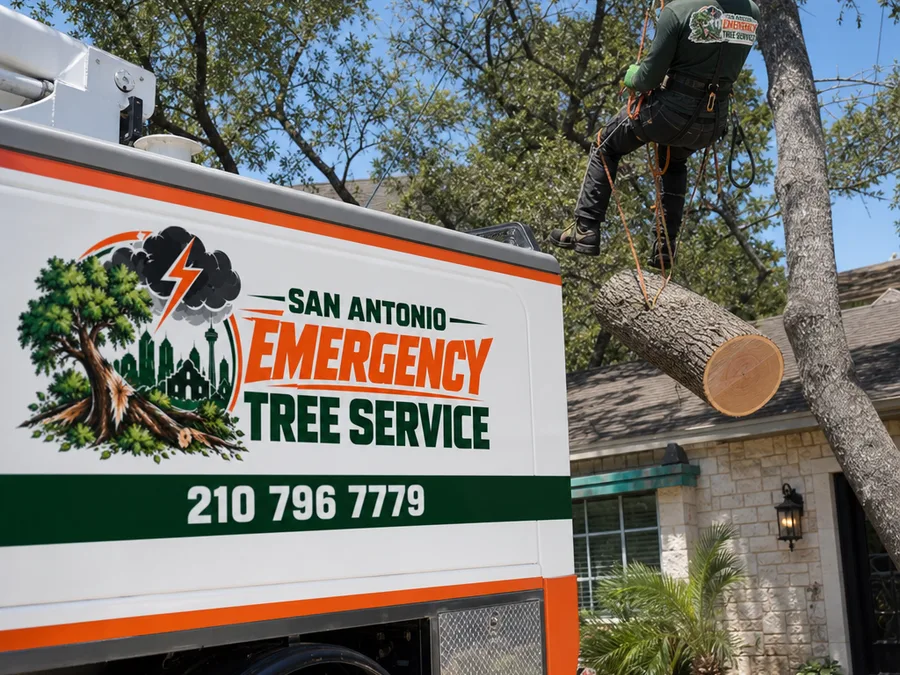
When there is no safe space to fell a piece, we cut it in manageable sections and lower it with rigging to avoid impact damage.
Chainsaws sized to the wood, pole saws for reach, and ropes and friction devices for lowering heavy pieces where they need to go.
We set work zones, protect landscaping where possible, and avoid unsafe contact with service drops and overhead conductors.
Cutting can be paired with haul-off, chipping, and stacking. If you want wood saved for firewood lengths, tell us up front so we can cut to size.
You are hiring a team that works in San Antonio neighborhoods every day and understands tight side yards, fence access, and HOA constraints.
Conditions and controlled solutions
Most requests fall into a few patterns, and each one changes how the cut is planned:
If a tree is touching electrical lines, keep everyone back and contact your utility first. Once the area is confirmed safe, we can cut and clear what is on your property.
From assessment to clear property
We look for splits, hanging branches, root heave, and anything under tension. If there is a structure involved, we identify what could be damaged by swing, roll, or bounce.
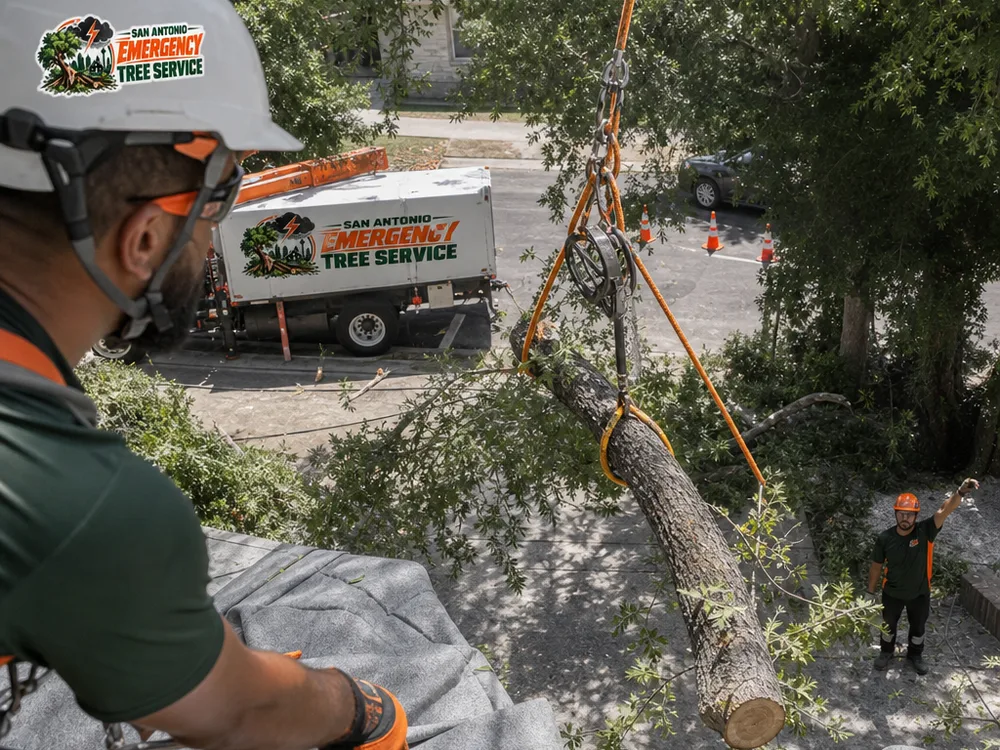
We choose the sequence that removes weight safely. For tight yards, we set ropes, pick tie-in points, and plan where sections will be lowered or carried.
Pieces come down in the order that keeps the remaining wood stable. When needed, we use rigging to guide heavy sections away from roofs, windows, and fences.
We clear limbs and debris from the work area, then walk the site with you. If anything should be addressed next, like a remaining split leader, you will get an honest recommendation.
Practical cost guidance
Tree cutting in San Antonio typically ranges from about $250 to $1,200+, depending on the hazard and complexity. A straightforward limb removal with easy access is often on the lower end, while storm-damaged trees over a roof, tight property-line work, or heavy rigging runs higher.
Final price is driven by limb and trunk diameter, how high the cuts are, access through gates or alleys, obstacles such as roofs, fences, and pools, whether material is hauled off or left stacked, and whether work must be staged for safety. Exact cost is confirmed after an on-site assessment of the tree and landing zone.
Practical answers before cutting begins
Yes, when conditions allow, we remove roof-contacting limbs in small sections and lower them in a controlled way rather than letting them drop. The key is identifying tension points, reducing weight gradually, and using rigging so pieces cannot swing into the roof edge or crush gutters on the way down.
Sometimes, depending on where you live and what tree is being cut. Rules can vary for protected or heritage trees and for work in certain regulated areas, so we recommend confirming requirements for your address before non-emergency cutting; for true storm hazards, safety comes first and the goal is to remove the immediate risk.
Treat a new lean as unstable and keep people away from the fall zone until it is assessed. A lean can indicate root plate movement or internal cracking, and cutting the wrong piece first can shift the tree unexpectedly, so it is safer to have a crew evaluate how to reduce weight and dismantle it in a controlled sequence.
Haul-off is usually available, and it is one of the biggest factors in the total price. If you prefer to keep wood on-site for firewood or chips, that is also possible, but you will want to decide early so we can cut lengths and stage material where you want it.
Response time depends on the severity of the storm and how many hazards are in the queue, but urgent access-blocking and roof-contact situations are prioritized. Sharing clear photos and describing what is being affected—driveway, roof, fence, or vehicle—helps us triage and plan the right equipment.
Often it is not, especially when wood is under tension or resting against structures. Kickback, pinched bars, and sudden rolling are common with storm-fallen trees, and many injuries happen during what looks like simple cleanup; if the tree is large, tangled, or near a building, professional cutting is usually the safer option.
Safe work starts with the right plan
Send a few photos and tell us what the tree is contacting or blocking. We will confirm the safest approach, what cleanup you want included, and what to expect before any cutting starts.