✓
Hazardous limb removal
Targeted removal of cracked, hanging, or overextended limbs over homes, driveways, play areas, and fences, with controlled lowering when needed.
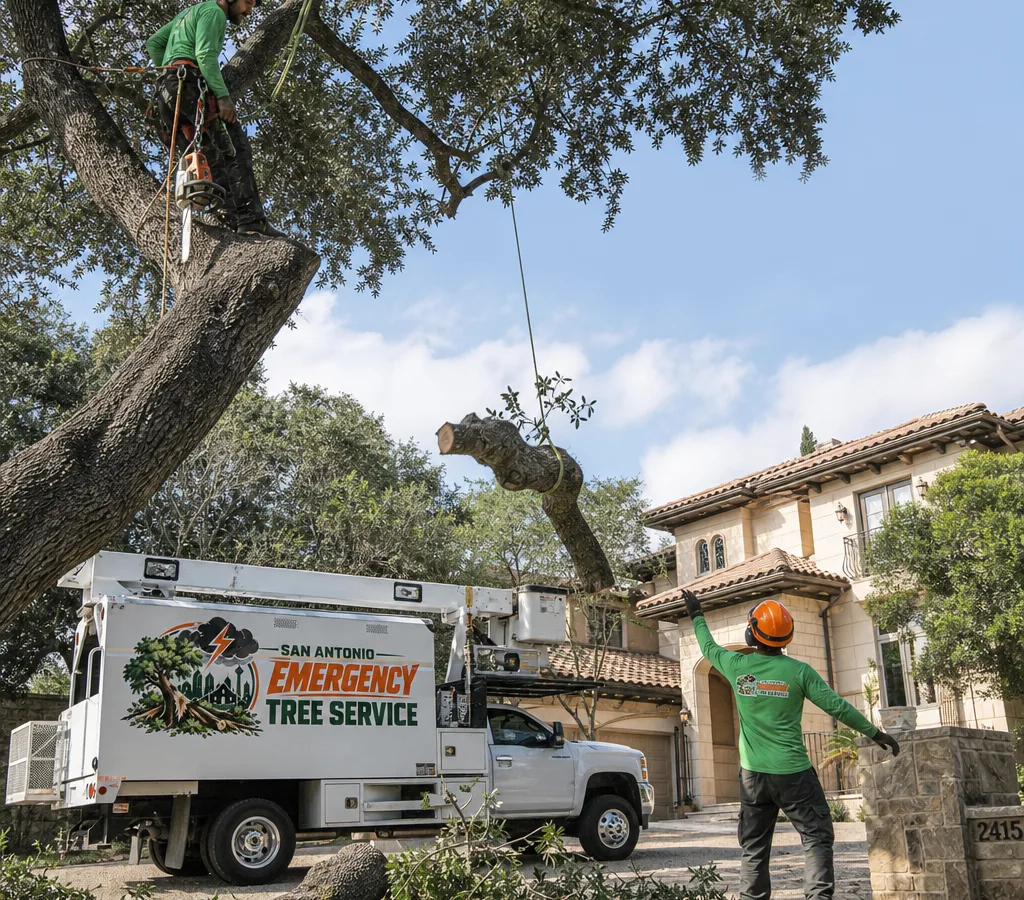
Tree trimming service · San Antonio
Reduce storm risk, clear hazardous limbs, and keep your canopy healthy with careful pruning, clean job sites, and scheduling that respects your time.
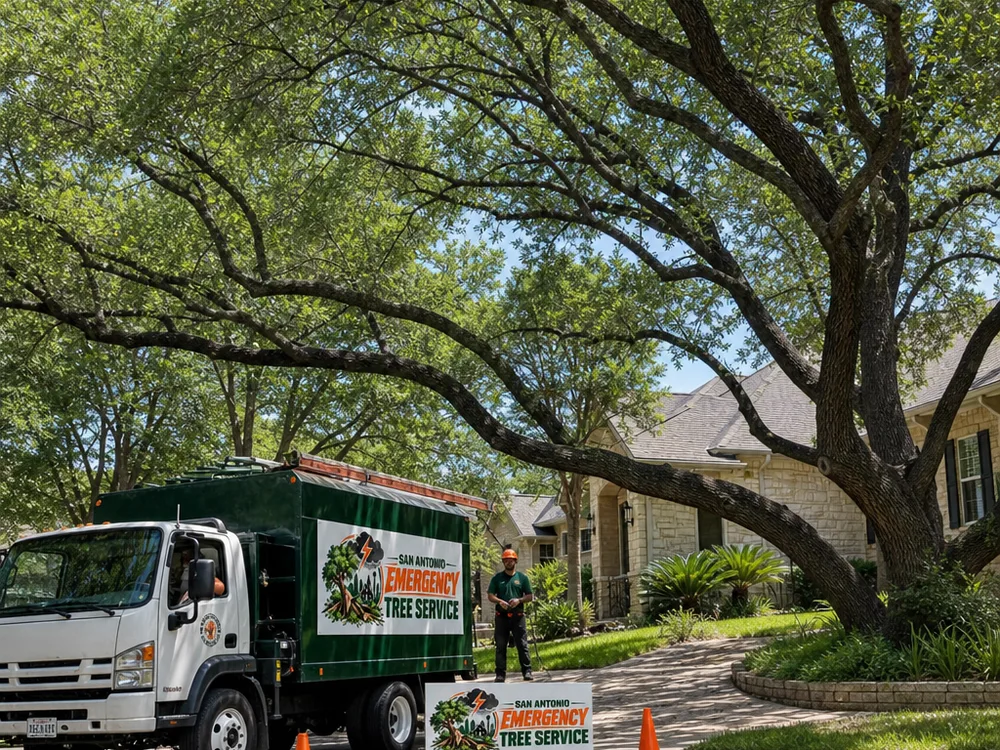
If you are searching for a tree trimming service San Antonio homeowners can count on, you are usually dealing with branches over a roof, storm-cracked limbs, or an overgrown canopy. We trim with safety-first methods and a clear plan for how each cut affects the tree and everything around it.
San Antonio wind and sudden heavy rain can quickly turn a weak union or overextended limb into a hazard. Mature neighborhoods, tight setbacks, roof edges, gutters, AC lines, and neighboring fences all require controlled work.
When trimming is not enough because a tree is dead, failing, or leaning with root movement, the safest next step may be tree removal in San Antonio after an on-site look.
Practical pruning solutions
Targeted removal of cracked, hanging, or overextended limbs over homes, driveways, play areas, and fences, with controlled lowering when needed.
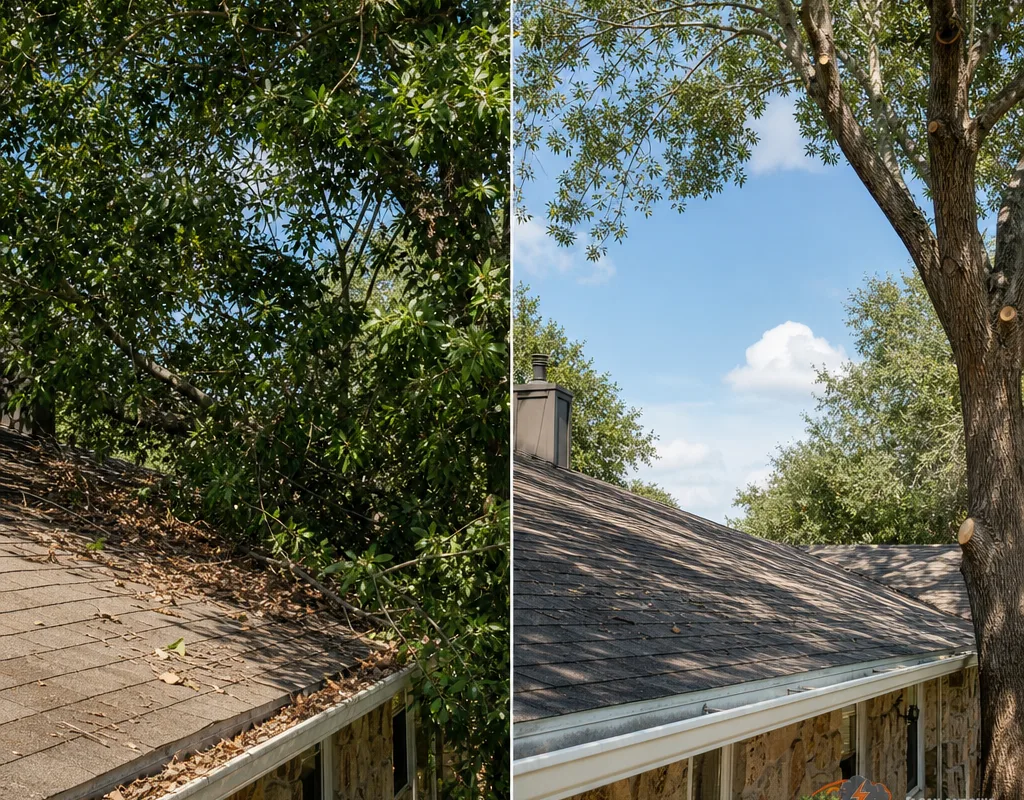
Pruning for clearance over roofs and gutters, above driveways, and along walkways so branches are not rubbing, scraping, or blocking access.
Selective pruning to remove deadwood and reduce weight and wind load without stripping the canopy or leaving weak, fast regrowth.
Early guidance cuts that encourage a strong structure and reduce future failure points as the tree matures.
Same-day or next-day help when available for storm-broken branches, limb hangers, and safe access restoration.
Right cuts, controlled work
Good trimming is more than making a tree smaller. The goal is to remove the right wood at the right location so the tree stays stable and can seal over the cut.
Crown cleaning removes deadwood and weak limbs, crown reduction shortens selected leaders to reduce end weight, and crown thinning selectively reduces density. We avoid topping because it forces weak regrowth and can make future failures more likely.
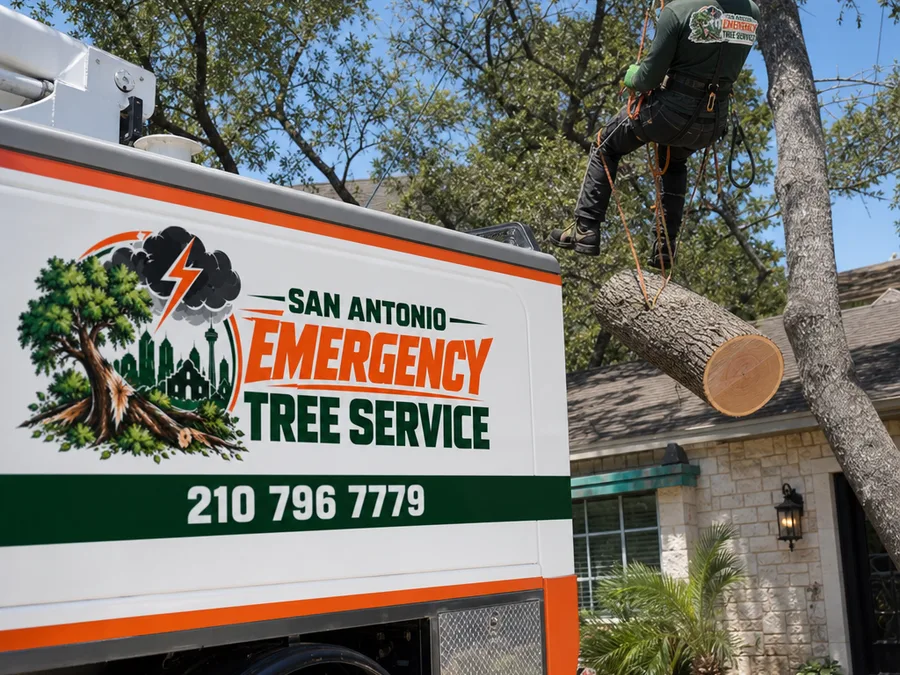
For larger limbs, controlled rigging keeps pieces from swinging into windows, shingles, vehicles, or landscaping. We plan the drop zone and staging so access stays open and debris removal remains predictable.
Narrow side yards, overhead service lines, and tight driveways may require ropes, friction devices, and spotters rather than free-dropping. Limbs near overhead lines are treated as high risk and planned accordingly.
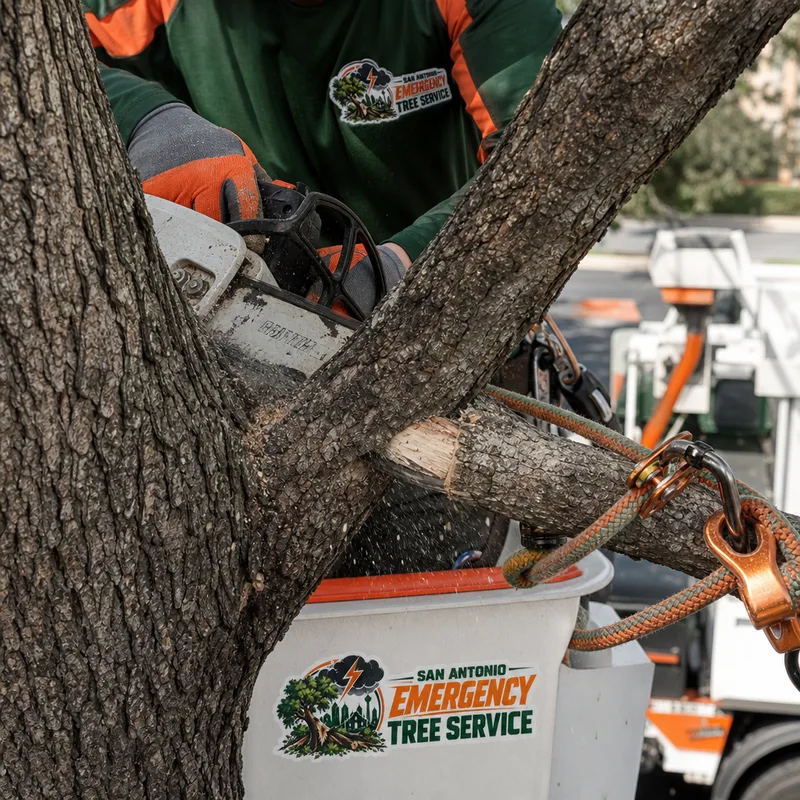
From assessment to clear yard
We look at targets such as rooflines, vehicles, patios, and fences, along with limb attachments, cracks, and signs of failure. You get a clear scope of what will be trimmed and why.
We choose climbing, ladder, or bucket access as appropriate, set drop zones, and protect sensitive areas near the work zone.
Cuts are made at the right pruning points, and heavier pieces are lowered with ropes when there is any chance of impact damage.
Brush and limbs are gathered and removed, the area is blown off and raked, and we review what changed and what to watch over time.
Practical cost guidance
Most tree trimming in San Antonio typically ranges from about $250 to $900 per tree, with small clearance trims often near the low end and large shade trees requiring climbing and rigging commonly landing higher. Complex jobs involving heavy limbs over a roof, tight access, or multiple trees can run $900 to $2,500+.
Your price depends on tree size and species, how much is being removed, proximity to structures, whether rigging is needed, and debris haul-off volume. Exact cost is confirmed after an on-site look at access, hazards, and the cut plan.
Practical answers before pruning
Scheduling depends on demand and the severity of damage, but storm-related hazardous limbs are prioritized when crews are available. If a branch is hanging over a roofline, blocking a driveway, or visibly cracked, share photos and its location so we can triage risk and plan access.
If branches are within reach of overhead lines or could contact them during cutting, the work must be planned around that risk and may require utility coordination or a different approach. We assess clearance, the drop zone, and the safest method before cutting.
Trimming is a general term, while pruning means selective cuts. Thinning removes selected interior branches to reduce density, and reduction shortens selected leaders to reduce end weight and leverage. A good plan uses the least cutting needed without stripping the canopy.
Yes. Roof and gutter clearance is one of the most common reasons homeowners book trimming. Selective pruning creates lasting clearance while preserving strong limb structure instead of cutting everything back evenly and triggering weak regrowth.
Yes, debris removal and job-site cleanup can be included. If you want to keep wood on-site for firewood or habitat, discuss that during the scope so stacking and cut lengths match your plan.
If the tree is healthy but has specific hazards such as deadwood, overextended limbs, or roof contact, trimming usually solves the issue. Major decline, trunk damage, severe lean with soil heaving, or repeated large limb failures may make removal safer.
Prepare before the next storm
Tell us what trees concern you in San Antonio and what they are near—roof, driveway, fence, or power lines. We will review access, recommend a practical pruning scope, and schedule the work with safety and cleanup handled start to finish.