✓
Storm cleanup and safety
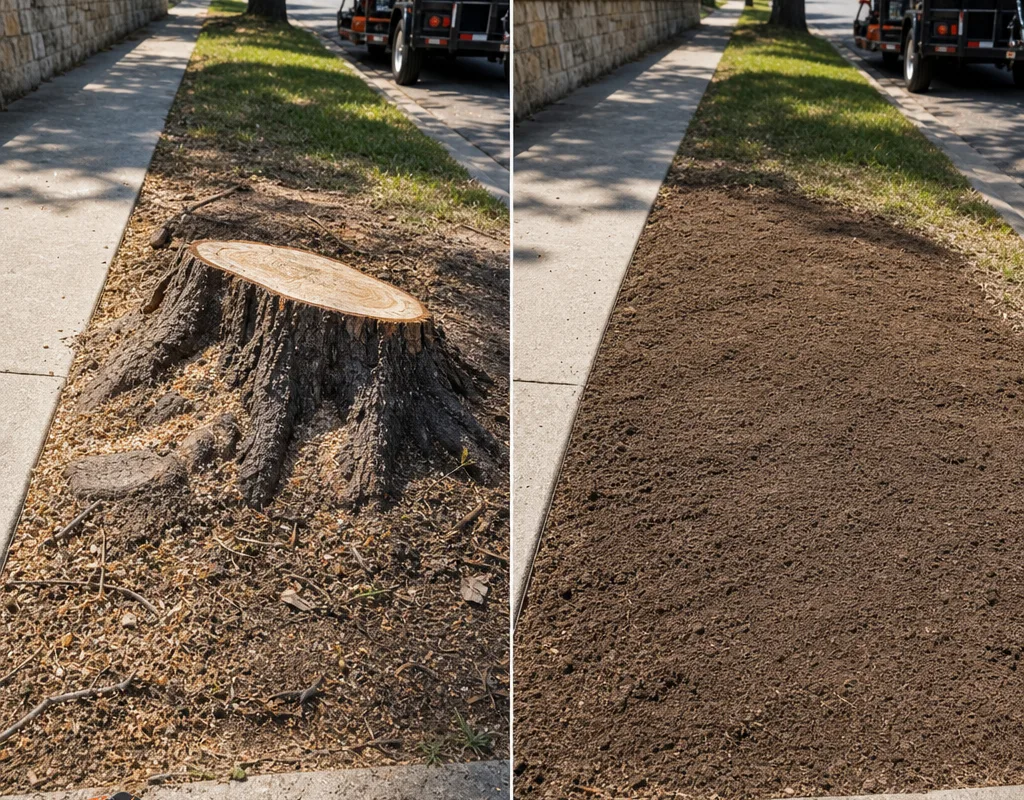
After high winds, a cut stump can sit where kids, pets, and crews need to walk. Grinding removes the tripping point and makes the area easier to clean and restore.
Stump grinding · San Antonio
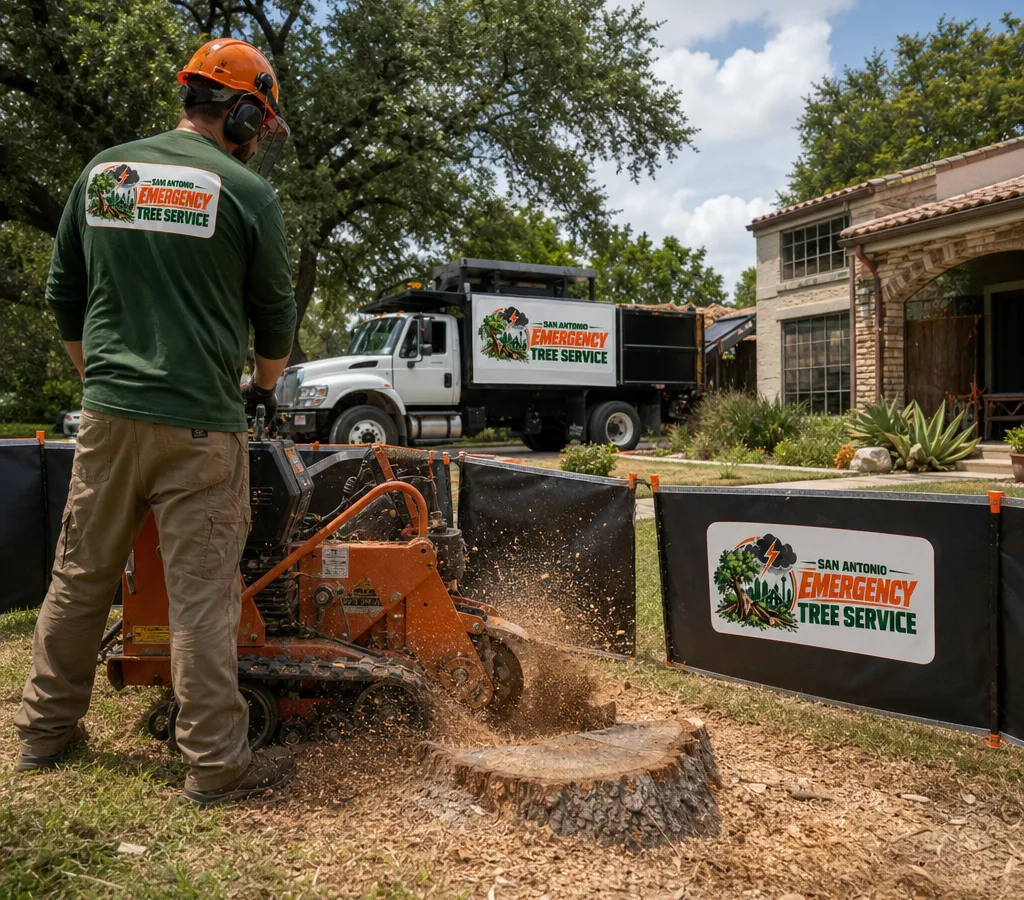
Remove trip hazards, stop regrowth, and get your yard back after a tree comes down. We grind stumps below grade with commercial equipment and leave the area ready for soil, sod, or stone.
If you are searching for stump grinding San Antonio homeowners can schedule quickly, you are usually dealing with a fresh stump after removal, storm debris cleanup, or an old stump that keeps sprouting. Grinding eliminates the stump below the surface without tearing up the whole yard the way full excavation can.
Emergency Tree Service San Antonio handles stump grinding across the San Antonio area for residential yards and commercial properties. The goal is simple: reduce hazards, protect mowers and walkers from hidden roots, and leave a clean, level finish.
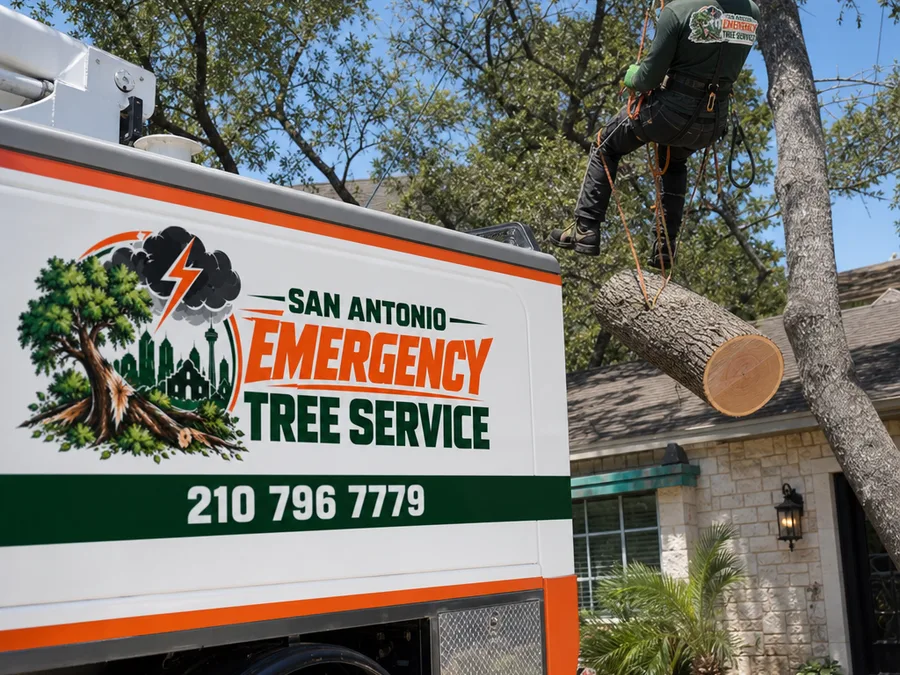
If a tree is still down or partially standing, it is safer to address that first so stump work can proceed with clear access. Our crew can manage the job from tree removal through final grinding.
Grinding depth and restoration
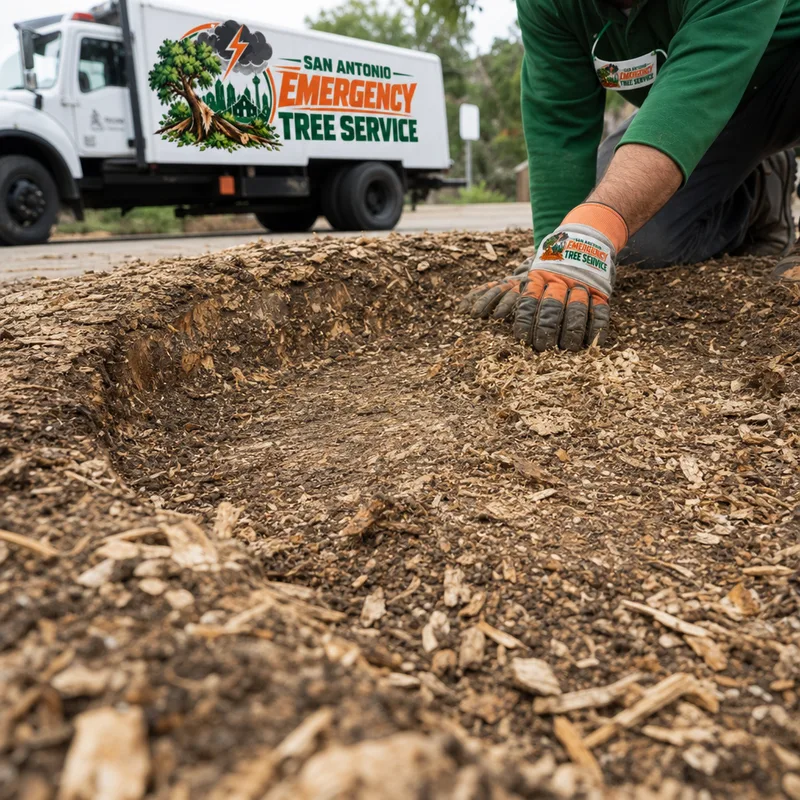
Stump grinding cuts the stump into small chips and grinds it several inches beneath the soil line so you can backfill and restore the surface. We manage machine position, cutting pattern, and depth according to your plans for turf, beds, or a walkway.
Grinding does not remove the entire root system. Large lateral roots can extend well beyond the stump and decompose over time. If you are installing a footing, fence posts, or hardscape where major roots run, tell us before work begins so we can discuss options.
Before starting, we check access and hazards. Tight side yards and irrigation lines in established neighborhoods such as Alamo Heights can limit approach angles, so we plan entry, machine placement, and chip control to protect landscaping.
Rocky caliche can also affect grinding depth and time when the cutter encounters buried stone close to grade.
We can leave the grindings for mulch or haul them away when you prefer a cleaner reset for sod or planting.
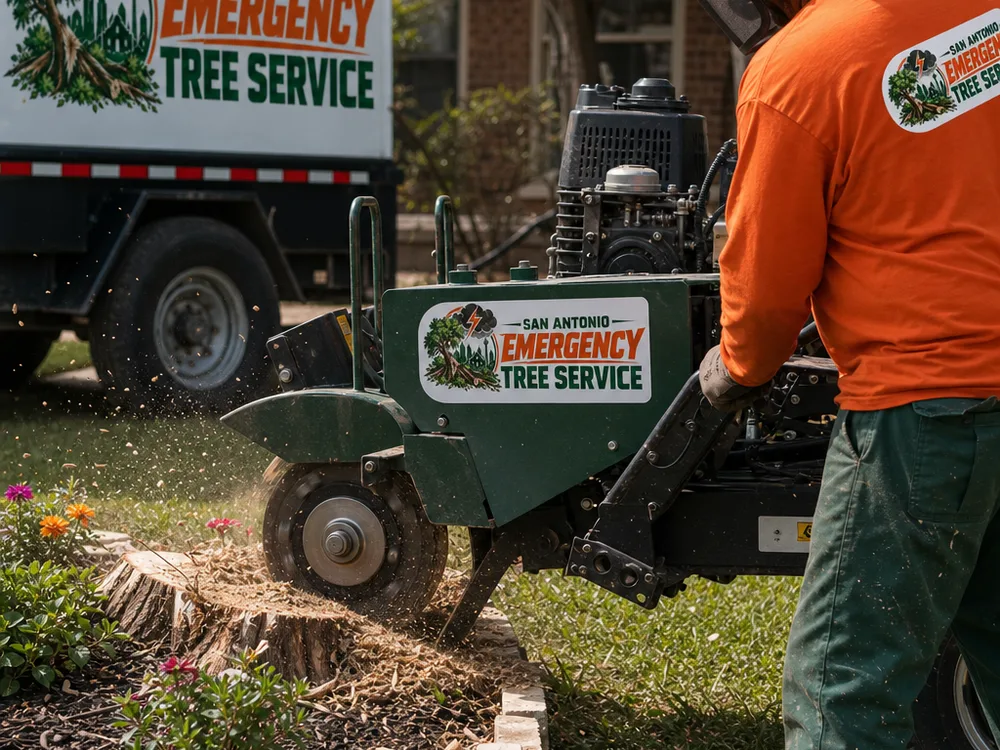
Hazard reduction and yard recovery
After high winds, a cut stump can sit where kids, pets, and crews need to walk. Grinding removes the tripping point and makes the area easier to clean and restore.
Some species try to regrow from the stump or root crown. Grinding reduces that regrowth pressure and makes follow-up treatment, if needed, more effective.
Stumps and surface roots bend blades, damage decks, and cause accidents. A below-grade grind helps keep maintenance predictable.
Grinding opens the area for soil, sod, or beds. If you want to replant, we can discuss placement so the new tree is not competing with old root mass.
In visible front-yard locations, a stump can make an otherwise tidy property look unfinished. Grinding lets you patch and blend the spot.
From access check to level finish
We confirm stump count, approximate diameter, and access limits such as gates, slopes, fences, and tight side yards. We also note irrigation heads, edging, and nearby hardscape.
If buried utilities may be in the work zone, we coordinate the right next step before grinding deeply near lines. We establish a controlled area for chip throw and bystander safety.
We grind the stump to the planned depth for your finish surface. When surface roots create an immediate hazard, we can often address the worst of them nearby.
We rake and level the grind area. You choose whether chips stay for mulch or are removed, and the area can be backfilled with soil for sod or seed settling.
Practical cost guidance
Stump grinding in San Antonio typically runs about $150 to $500 for a single average stump, with large-diameter stumps, multiple stumps, or difficult access pushing totals to $600 to $1,500+. Very small stumps may price lower when combined with other work.
Final pricing depends on stump diameter measured at ground level, wood hardness, machine travel distance, slope or gate-width limits, surface roots, and whether you want chips hauled away and the area backfilled. Exact cost is confirmed after a quick on-site look at the stumps and access.
Practical answers before grinding
Most jobs are ground several inches below grade so the area can be backfilled and finished. Depth can be adjusted for sod, mulch, or a more structural surface. Tell us about planned patios or footings so we can discuss whether deeper grinding or selective root work makes sense.
Grinding is localized, but the machine needs an entry path and turning space and will produce chips. We plan approach and staging carefully in tight yards, and ask you to identify irrigation heads, drip lines, and low-voltage lighting.
If buried utilities may run near the stump, marking guidance is a smart safety step before grinding below grade. During scheduling, tell us whether the stump is in a front yard, near a driveway, or along a fence line so we can recommend the safest next step.
You can keep the grindings as mulch or have them removed. For immediate grass planting, most homeowners prefer chips removed or blended with added topsoil because a thick chip layer can interfere with a clean turf finish.
Often, yes. The approach depends on clearance and what must be protected. We may use a controlled grinding pattern to reduce chip throw and avoid hardscape edges, or leave a small buffer when a stump sits tightly against a structure.
You can usually restore grade the same day, but planting another tree in the exact spot is not ideal because old roots and chips remain. A new tree typically does better a few feet away in fresh soil. Turf or a bed can move forward after backfilling, leveling, and settling.
A clear plan for a clean finish
Send the stump location, approximate size, and any access notes such as gates, slopes, or nearby irrigation. We will confirm the safest approach, scheduling options, and what the finished area will look like when we are done.