✓
Storm-broken limbs and hangers
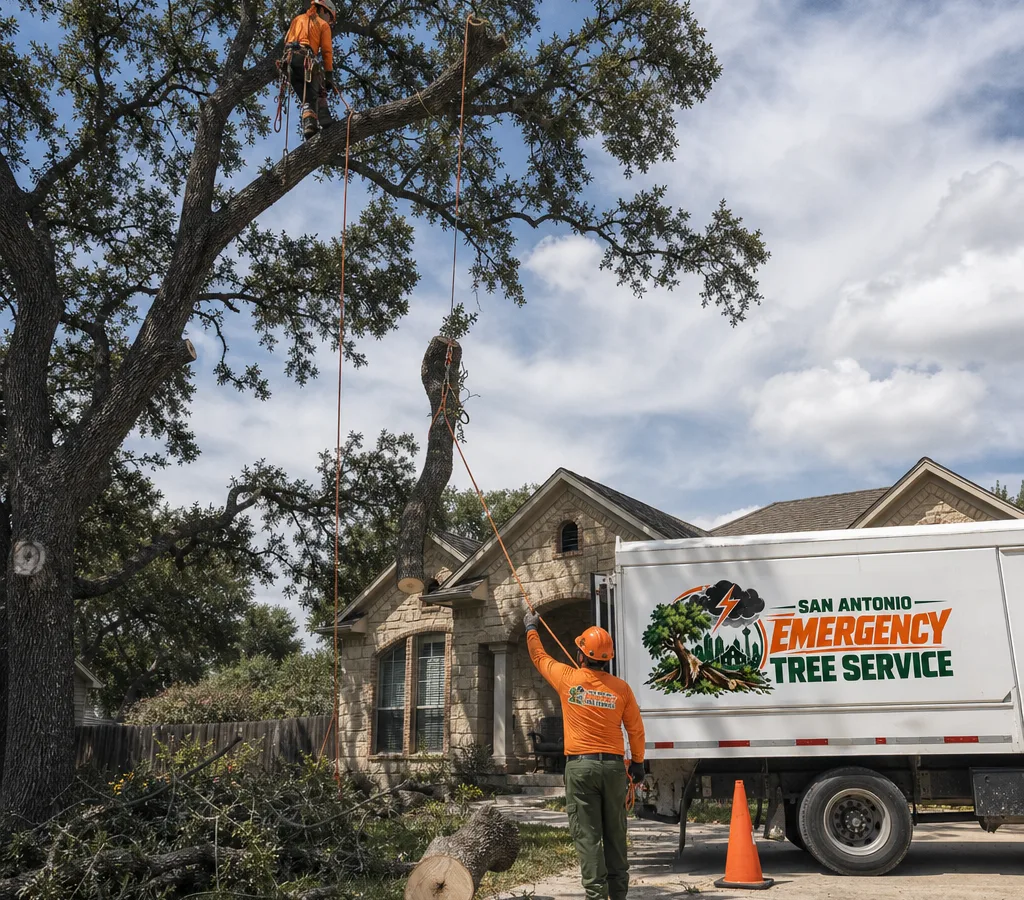
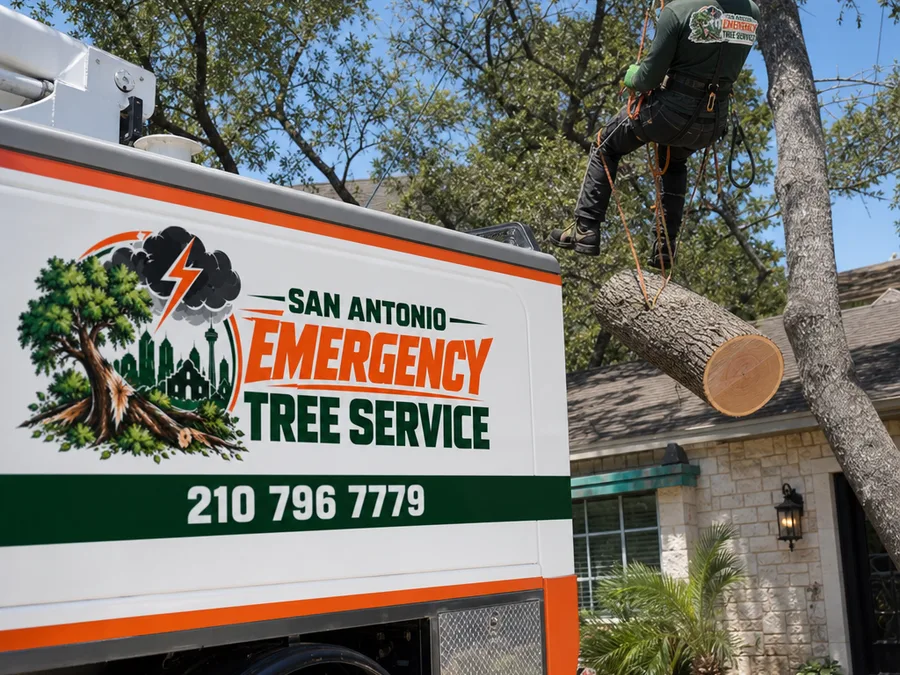
After heavy wind, a partially attached limb can drop without warning. We remove hangers first, then address the cuts needed to stabilize the canopy.
Tree trimming · San Antonio
Get unsafe limbs handled fast with a safe, insured crew and a clear plan for pruning, storm damage cleanup, and ongoing canopy care.
If you searched for tree trimming San Antonio, you are probably dealing with branches over a roof, limbs tangled near service lines, or a canopy that has grown too heavy for the next round of wind and storms. Proper trimming is about managing weight and structure, not just making a tree smaller.
Emergency Tree Service San Antonio handles trimming for safety hazards, storm damage, and routine maintenance across San Antonio, TX, including the 78230 area. We evaluate deadwood, crossing branches, weak unions, over-extended limbs, and clearance issues, then recommend the least aggressive pruning that creates a safer canopy.
You receive straightforward options and a written scope before cutting starts. For urgent situations, dangerous hangers, broken limbs, and branches threatening homes, fences, driveways, or parked vehicles are prioritized.
Risk reduction and canopy care
Tree trimming in San Antonio TX is usually a mix of risk reduction and long-term tree health. On-site, we focus on the areas that change the tree’s failure risk the most:
We make proper pruning cuts at the branch collar and avoid topping. Cutting leaders back to stubs tends to trigger weak regrowth and can make the next failure worse.
Conditions and solutions
After heavy wind, a partially attached limb can drop without warning. We remove hangers first, then address the cuts needed to stabilize the canopy.
Roof overhangs invite damage in gusts and scrape shingles year-round. We reduce weight back to stronger laterals and clear the roofline without over-thinning.
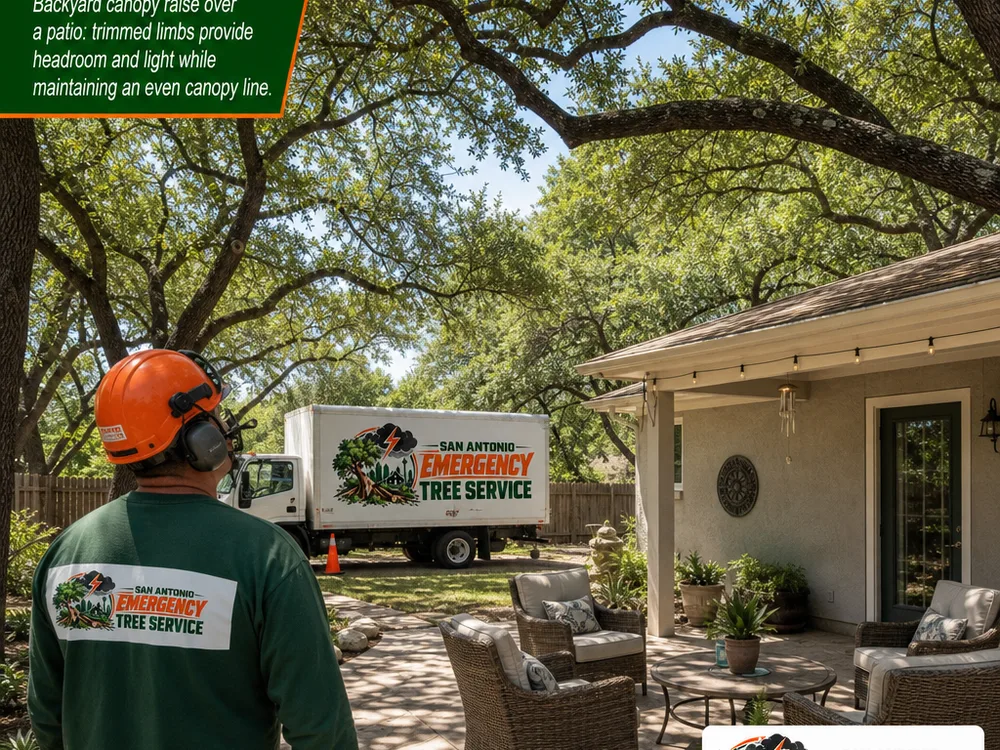
Canopy raising improves access and visibility. The goal is clearance and balance, not stripping the tree up one side.
Branches that touch create wounds and weak points. Selective pruning reduces friction and improves structure without turning the canopy into a lion tail.
Trimming near lines needs careful planning and the right rigging. If a utility needs to be involved, we will tell you before work starts.
Bad pruning often leaves heavy end-weight and odd regrowth. We focus on gradual corrections that lower risk while letting the tree recover.
From assessment to cleanup
We walk the tree and drop zone, checking for deadwood, splits, decay indicators, and what the tree could hit if a limb fails. We also confirm access for equipment and cleanup.
You get a clear scope listing what is being trimmed and why, plus how roofs, landscaping, and hardscape will be protected. When rigging is needed, we plan the lowering points and landing area.
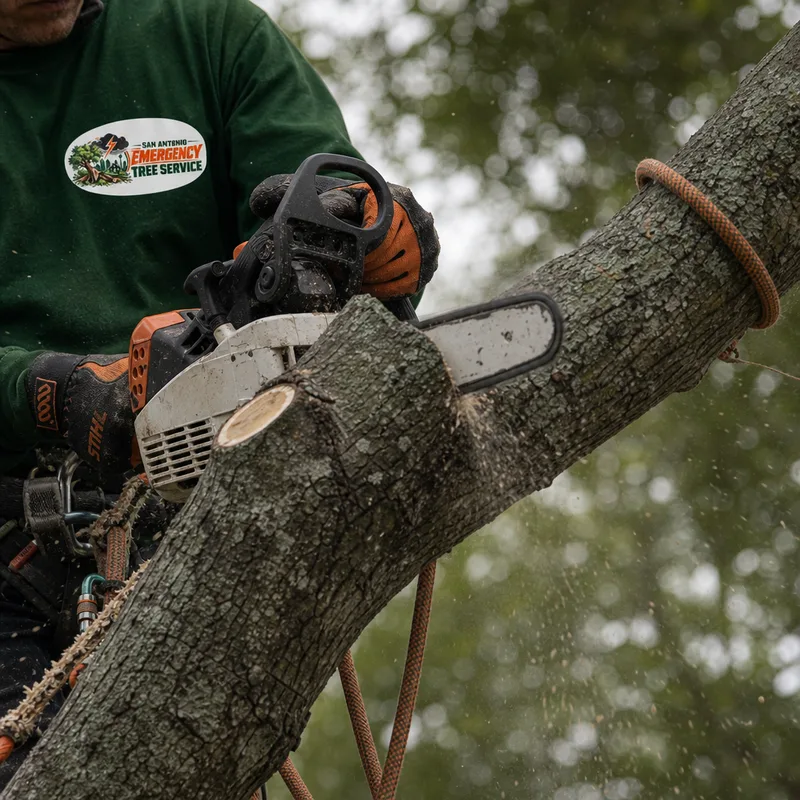
We prune with a focus on structure and clean cuts, using ropes to lower sections safely when property lies below. The goal is a stable canopy with a natural shape.
We clean limbs and brush from the work area and confirm the original hazards were addressed. If we find signs that a tree is beyond safe pruning, we explain the options.
Practical cost guidance
Tree trimming in San Antonio typically ranges from about $250 to $1,200+ per tree, depending on size, access, and how technical the work is. Light pruning on a small ornamental tree is often $250 to $450, while larger shade trees with significant deadwood, roof-clearance needs, or rope lowering can run $650 to $1,200+.
Final pricing depends on tree height and limb diameter, proximity to roofs and fences, whether rigging is required, debris volume, and whether storm damage has created unstable hangers. Exact cost is confirmed after an on-site assessment of the tree and work area.
Local conditions shape the plan
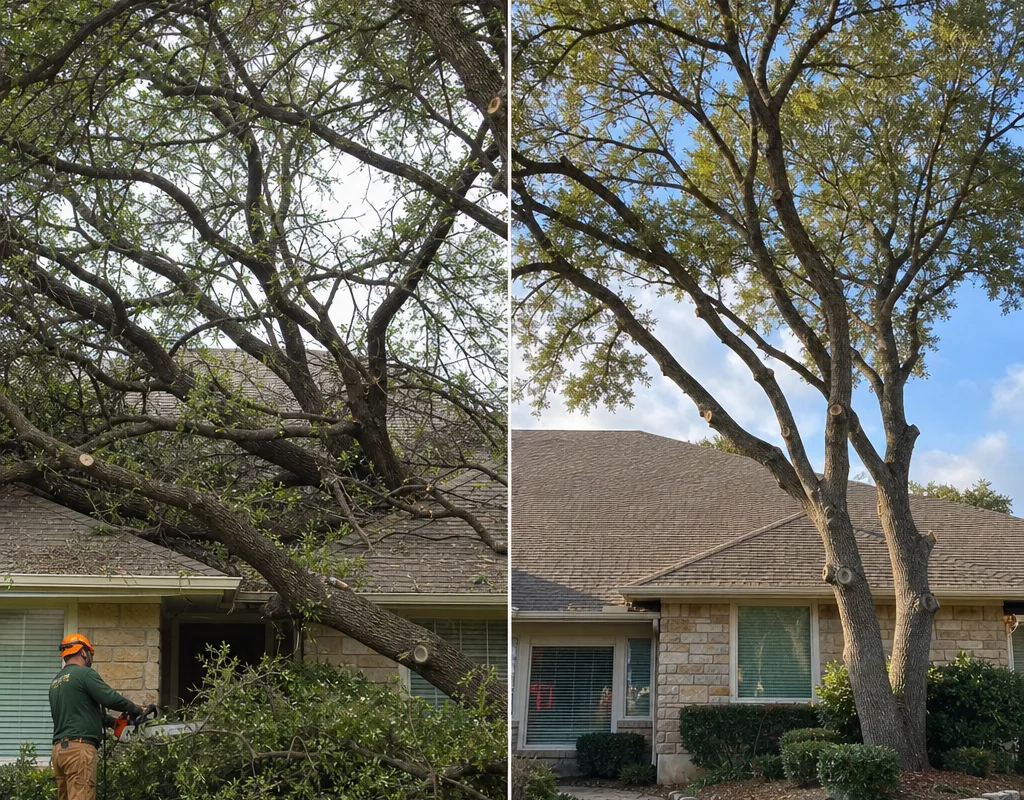
San Antonio wind and storm patterns can turn small defects into sudden failures. A long, heavy limb over a roof is a different job than cosmetic pruning in an open backyard, and the safest approach is often selective reduction back to strong laterals rather than taking random length off the ends.
Access also changes the plan. In established neighborhoods with tight side yards and overhead obstacles, work may require more controlled lowering and smaller cut sections to protect fencing, patios, and landscaping. In areas with heavy foot traffic near the Medical Center, trimming often emphasizes clearance over sidewalks, parking areas, and drive lanes.
If trimming reveals severe structural cracks, extensive decay, or another condition that cannot be made reasonably safe with pruning, removal may be the responsible option. The decision should be based on the on-site risk, workable scope, and budget.
Request Emergency ServiceBalanced canopies and controlled work
Practical answers before work begins
Yes, when there is an active hazard like a hanging limb, a split branch, or a limb resting on a roofline, we prioritize fast dispatch based on safety risk and crew availability. The first goal is to remove or stabilize what could fall, then we can quote the follow-up trimming needed to rebalance the canopy.
Topping is almost never the right fix because it removes the tree's natural structure and often creates weak, fast regrowth at the cut points. If height reduction is needed, we use selective reduction cuts back to appropriate laterals so the tree keeps a stable shape.
We use controlled cuts and, when needed, ropes to lower limbs away from the roof rather than letting pieces swing or drop. We also plan the drop zone and cut size so weight does not bounce onto gutters, AC linesets, or landscaping.
Debris handling is typically part of the scope and is confirmed in writing before work starts. If you want wood left on-site for firewood or habitat piles, that can usually be built into the plan as long as there is a safe place to stage it.
Trimming can reduce failure risk by removing deadwood, reducing end-weight, and improving balance, but it cannot guarantee a tree will never fail in extreme weather. If we see structural defects that pruning cannot reasonably correct, we will explain the risk and the options.
Clear photos of the full tree, the problem limbs—especially anything over a roof—and the access path to the work area help a lot, along with notes on what the limb could hit if it fails. For final pricing and the safest cutting plan, an on-site look is still the standard.
Safety starts with a clear plan
Tell us what the tree is doing—roof contact, hanging limb, clearance problem, or storm damage—and when you noticed it. We will confirm the safest approach, outline the scope in plain language, and schedule the work based on urgency.